The Innkeepers Journal
If These Walls Could Talk
More than 300 years of stories at the Samuel Fitch House
Some houses are simply places to live. Others seem to hold the stories of everyone who has ever called them home. The Samuel Fitch House, nestled along Powers Road in Westford, Massachusetts, is one of those special places.
Built in 1711, this historic New England saltbox has stood through colonial times, the American Revolution, the Civil War, and generations of changing American life. Yet through it all, it has remained what it was intended to be—a home. And what stories these old walls could tell!
A House Before Westford Was Westford
When Walter Powers, a local minister, built the house in 1711, Westford was still part of Chelmsford. It would be another eighteen years before Westford became an independent town.
The original farmhouse was built around a central chimney with five fireplaces, providing warmth to the family who lived within its walls. An indoor smoke room was used to preserve meat, a reminder of a time when families relied upon the land and their own resourcefulness.
In 1732, Samuel Fitch purchased the property and settled into life as a gentleman farmer. The Fitch family would remain connected to the house for generations, leaving behind the name it still proudly carries.
Whispers of Revolution
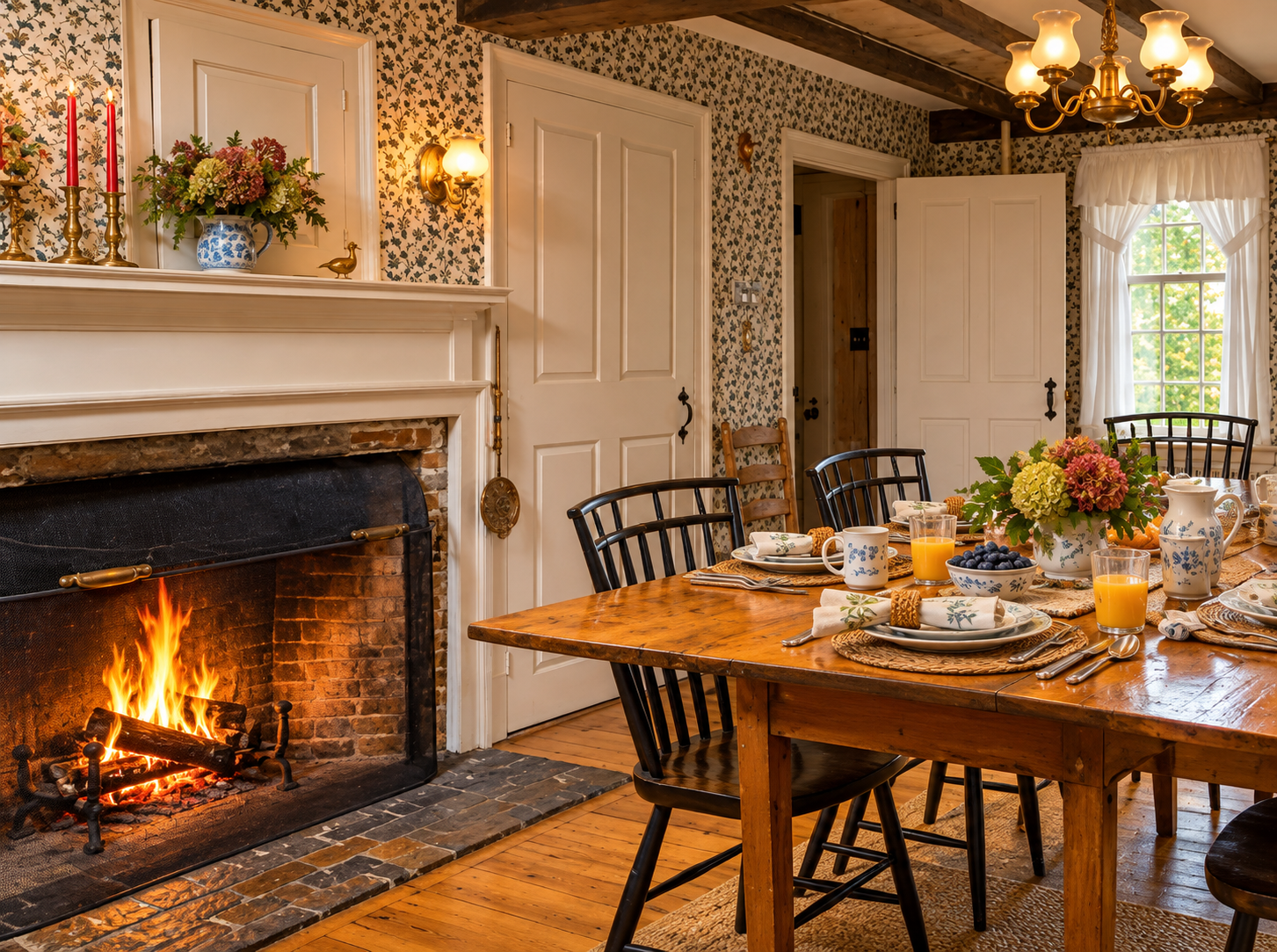
As tensions grew between the American colonies and Great Britain, the farmhouse became part of a changing world. According to the house's history, its dining room once served as a gathering place for local patriots and members of revolutionary committees. Imagine the conversations that may have taken place beside the fireplace, as neighbors discussed the uncertain future of their young country.
Among the family's connections to this remarkable period was Lydia Fitch, Samuel's daughter, who married Francis Leighton, a man who would become involved in local revolutionary affairs.
Even today, the rooms seem to invite us to imagine those earlier days.
Secrets Beneath the Floorboards
Perhaps some of the most intriguing stories associated with the Samuel Fitch House come from the nineteenth century. During the 1840s, the Murphy family acquired the property and expanded its farming operations. The land grew to encompass hundreds of acres, with barns and other agricultural buildings supporting life on the farm.
But it is what lies beneath the house that has inspired some of its most fascinating stories.
A passage in the cellar and a concealed space behind a movable bookshelf have long been associated with local accounts of the Underground Railroad. According to family tradition, these hidden places may have offered refuge to people escaping slavery on their journey toward freedom. Although the house's precise role has not been conclusively documented, the stories have been passed down through generations and remain an intriguing part of its history.
They remind us that an old house can hold memories of courage, uncertainty, and the human desire for freedom.
A Home Through the Generations
As the years passed, the farmhouse continued to grow and change. Different families cared for the property, adapting its rooms and outbuildings to suit their lives. Barns were repurposed, living spaces expanded, and the house gradually took on the character we know today. Yet its early
New England spirit remained. The wide wooden floors, fireplaces, old beams, and intimate rooms tell a story that no modern building could quite reproduce.
And for Lynne, whose family has called this farmhouse home for more than half a century, its history is deeply personal. It is a place of childhood memories, family gatherings, changing seasons, and generations growing up beneath the same roof.
A New Chapter in a Very Old Story
Today, after years of thoughtful restoration, the Samuel Fitch House is beginning another chapter as a welcoming bed-and-breakfast.
The Carriage House offers guests a private retreat, while the farmhouse and grounds continue to reflect the character and traditions of this remarkable property. There is something special about spending time in a place where history isn't confined to a museum or a book. It lives in the architecture, the gardens, the family stories, and the everyday rhythms of the home. More than three centuries after Walter Powers first built his farmhouse, the Samuel Fitch House continues to welcome new stories. And perhaps that is the loveliest part of all.
The history is still being written.